How the Rice Purity Score Is Calculated
The rice purity score is 100 minus the number of statements you check. Here is the formula, a worked example, what each band means, and what 59 completed tests on this site actually show.
The rice purity score is one number between 0 and 100, and the way it is produced is simpler than most people expect. There is no weighting, no hidden algorithm and no personality model behind it. You start with 100 points and you lose one point for every statement on the list that applies to you. This guide walks through the arithmetic, shows what each range of the scale describes, and uses the anonymous results collected on this site to put your own number in context. If you want to see it work before reading further, take the Rice Purity Test and come back with your result.
What the score is counting
The test is a checklist of 100 statements about experiences, most of them social, romantic or legal in nature. Every statement is worth exactly one point and every point weighs the same. Skipping a class counts the same as any other single item, because the list was never designed as a graded instrument. It began as student culture at Rice University in Houston and spread by photocopy and email long before it reached the web, a path covered in detail in the complete history of the test.
So the score answers one narrow question: how many of these 100 specific things have you done. It does not answer how often, how recently, or in what circumstances. That is the whole reason the number is easy to calculate and easy to misread at the same time.
The formula
The calculation is this:
Score = 100 minus the number of statements you check
Nothing else enters the equation. If you check 29 items, your score is 71. If you check none, you finish at 100. If you check all of them, you finish at 0. Because each item is one point, the maximum possible score is 100 and the minimum is 0, and every value in between is reachable.

Our version follows that rule without modification. The count happens in your browser as you tick boxes, which is why the result appears the moment you finish rather than after a server round trip. Nothing about your answers is attached to your name, and the privacy policy sets out exactly what is and is not stored.
A worked example
Take someone who checks 23 statements across the milder sections of the list and 6 more in the later sections. That is 29 checks in total, so the score is 100 minus 29, which is 71. A second person checks 52 statements and scores 48. The gap between the two of them is 23 items, not 23 units of character. Read the gap as a difference in the count and the number stays useful.
One consequence of the formula is worth stating plainly: a lower score is not a failing grade and a higher score is not a pass. The scale runs from fewer experiences to more, and both ends of it are completely ordinary.
What each range describes
- 90 to 100. Very few items checked. Common among younger participants and anyone who has not been in the situations the list describes.
- 70 to 89. A moderate count. This is where a large share of results land.
- 50 to 69. Roughly half the list checked. Typical of people a few years into adult social life.
- Below 50. More than half the list checked. It signals a wider range of experiences and nothing more than that.
Those labels are descriptive, not diagnostic. The FAQ covers the questions people ask most about interpreting a specific number.
What the results on this site look like
We keep an anonymous tally of completed tests so the scale has real context instead of guesswork. At the time of writing, 59 tests have been completed here. The average score is 64.7 and the median is 71. The lowest recorded result is 11 and the highest is 100, so the full width of the scale is in use.
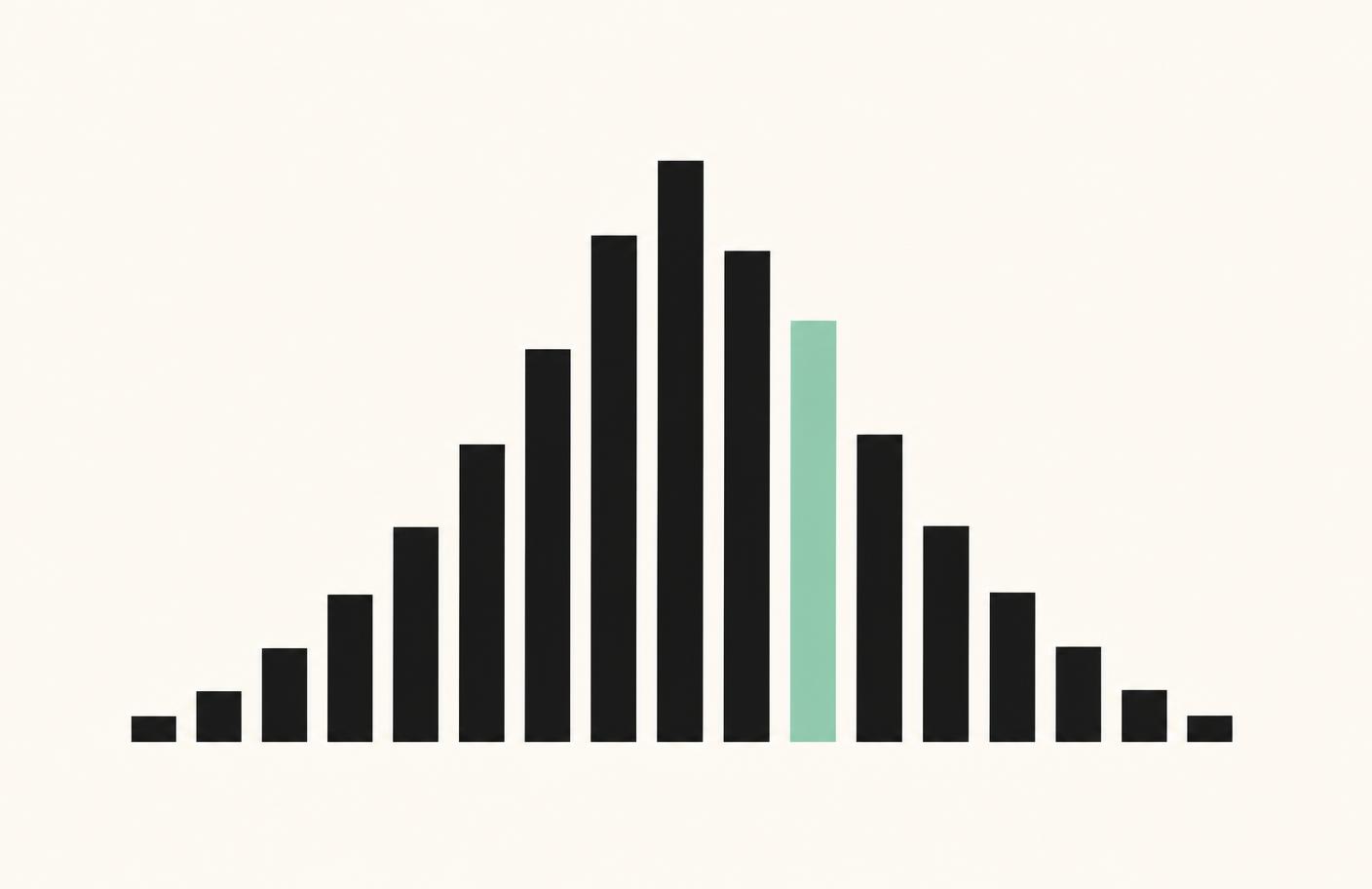
Split into the four bands, the results break down as follows: 12 scores of 90 or above, 19 scores between 70 and 89, 9 scores between 50 and 69, and 19 scores below 50. The median sitting above the mean tells you the lower scores pull the average down while most results cluster higher. If your number is in the 60s or 70s you are close to the middle of what people actually report here.
Two caveats matter. This is a self selected group of visitors, not a random sample of any population, and the totals move as more tests are completed. Treat the figures as a snapshot of this site rather than a statistic about students in general.
Why the same person gets different scores on different sites
The formula is stable but the list is not. Copies of the 100 statements were retyped and edited for two decades, so wording, ordering and even entire items differ between versions. If you score 71 on one site and 64 on another, the likely cause is that you answered two different lists rather than a change in you. Compare scores only when both people used the same version, which is the point made in our explainer on what the test is.
The limits of a single number
A checklist total cannot capture context, consent, timing or meaning, and it has no clinical standing of any kind. Reviews of self report measures published through the National Library of Medicine consistently note that unvalidated questionnaires are shaped by recall and by how willing people are to disclose, which is exactly the position this test is in. It is a conversation starter with a consistent counting rule.

Used that way it does something genuinely useful: it gives a group of friends a shared frame of reference in about five minutes. Used as a verdict on someone, it fails immediately, because two people with the same total can have lived very different lives.
How to get a number worth keeping
Answer in one sitting, read each statement as written instead of interpreting it generously, and count an item if it happened once. Do not adjust the total afterwards to look better or worse. If you are taking it with friends, agree to use the same version so the comparison holds. You can start from the homepage or go straight to the test, and the about page explains how we built and maintain it.
Frequently asked questions
How is the rice purity score calculated?
Start at 100 and subtract one point for each of the 100 statements that applies to you. There is no weighting and no bonus, so 29 checked items always produce a score of 71.
What is a normal rice purity score?
There is no official normal. On this site the average of 59 completed tests is 64.7 and the median is 71, which means scores in the 60s and 70s are the most ordinary outcome here.
Is a low rice purity score bad?
No. The scale measures how many listed experiences you have had, not conduct or worth. A low number means more items checked and nothing beyond that.
Can a score be higher than 100 or below 0?
No. There are exactly 100 one point statements, so the range is fixed at 0 to 100.
Why did my score change when I took the test again?
Either you answered a different version of the list or you read one of the borderline statements differently the second time. The formula itself never changes.
Is my answer data stored against my name?
No. Scoring happens in your browser and only an anonymous total is kept for the site statistics quoted above.