What Is the Rice Purity Test?
A plain explanation of the Rice Purity Test: where it came from, how the 0 to 100 score is calculated, what each score band means, and real result data recorded on this site.
The Rice Purity Test is a 100 question self checklist about life experiences. You read each statement, mark the ones you have done, and get a score between 0 and 100. A high score means you have ticked fewer items. A low score means you have ticked more. There is no pass mark, no grade, and no psychological diagnosis attached to the result.
This guide explains where the test came from, how the scoring actually works, what the numbers mean, and how our version at dricepuritytest.com differs from the copies floating around the web. It also shows real numbers from tests taken on this site so you can compare your own result against something concrete instead of a rumour.
Where the test came from
The checklist started at Rice University in Houston, Texas, and circulated among students during orientation week as an icebreaker. Early versions were printed on paper and passed around dorms. When the format moved online in the late 1990s, the question list was copied, edited, and reposted many times, which is why two versions you find today rarely match item for item.
Rice University does not run, endorse, or maintain any of the websites that host the test now, including this one. The name stuck because that is where the list began, not because the university publishes it. For the full story of how the checklist moved from paper to the web, read The Complete History of the Rice Purity Test.
How the scoring works
Every question you leave unmarked is worth one point. Start at 100, subtract one point for each item you check, and the remainder is your score. Someone who marks 28 items scores 72. Someone who marks all 100 scores 0. The maths is that simple, and any site showing a different formula is using a different question set.
Because the score is a subtraction, it measures breadth of experience rather than depth. Marking one item once counts the same as marking it a hundred times. That is worth remembering before reading anything into a single number.
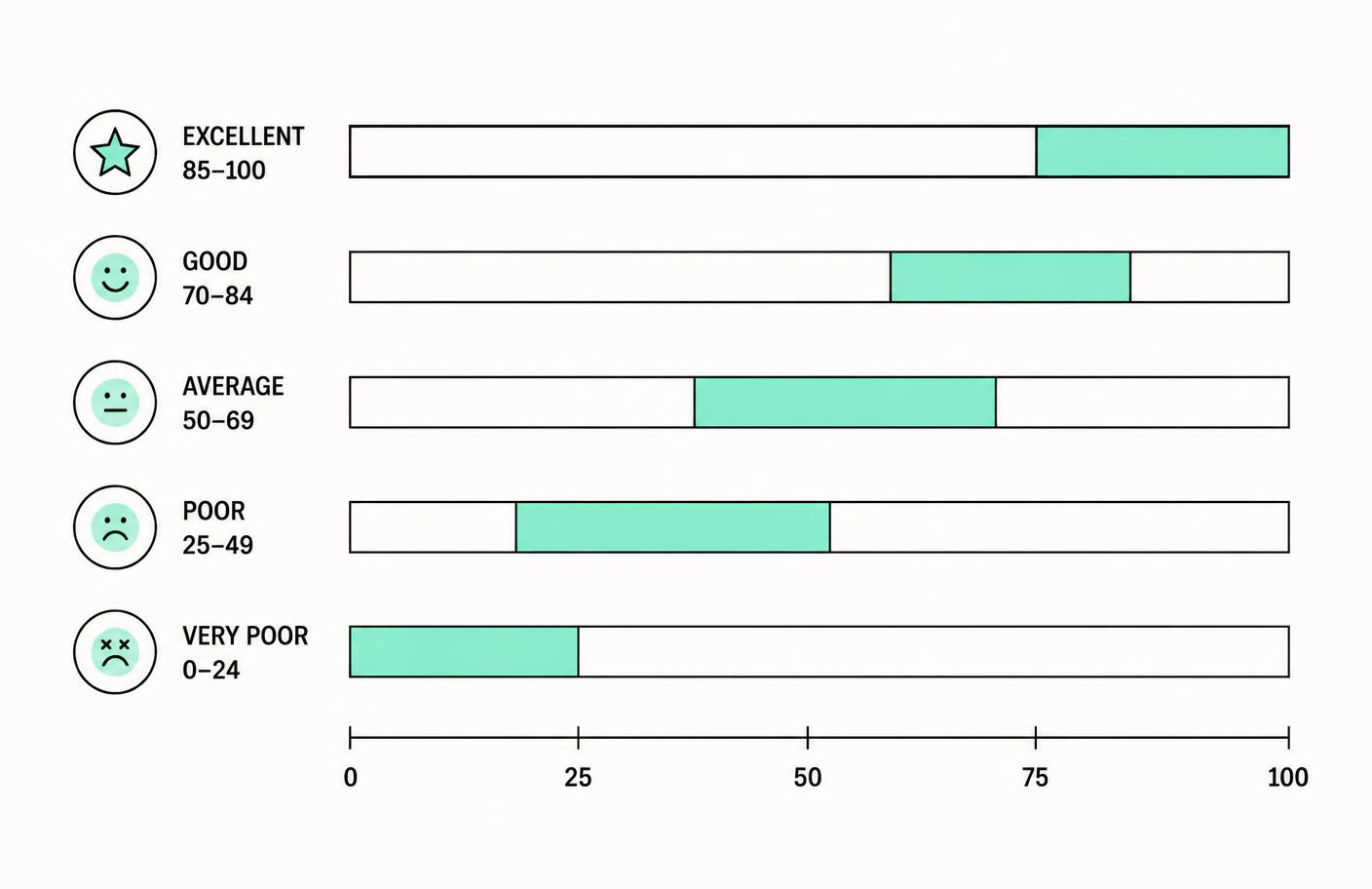
Score bands used on this site to describe results.
What the score bands mean
85 to 100: Few of the listed experiences apply. Common among younger participants and people who have not lived away from home.
70 to 84: Some social and relationship experiences, little of the riskier material.
50 to 69: A mixed profile, typical of people in or just out of university.
25 to 49: Most social and relationship items marked, with several of the higher risk questions.
0 to 24: The large majority of items marked.
These bands are descriptive labels, not judgements. Two people with the same score can have ticked completely different questions.
Real numbers from this site
Instead of quoting an average from someone else's blog, here is what tests completed on dricepuritytest.com actually show. At the time of writing, 54 completed tests have been recorded on the site with the following spread:
Average score: 65.3
Median score: 71
Lowest recorded score: 13
Highest recorded score: 100
Scored 85 or above: 14 people
Scored 70 to 84: 15 people
Scored 50 to 69: 7 people
Scored below 50: 18 people
The median sitting above the average tells you the distribution leans high with a tail of lower scores pulling the mean down. In plain terms, most people who take the test here score in the 70s and above, and a smaller group scores well under 50. If your result lands between 60 and 80 you are in the most crowded part of the range.
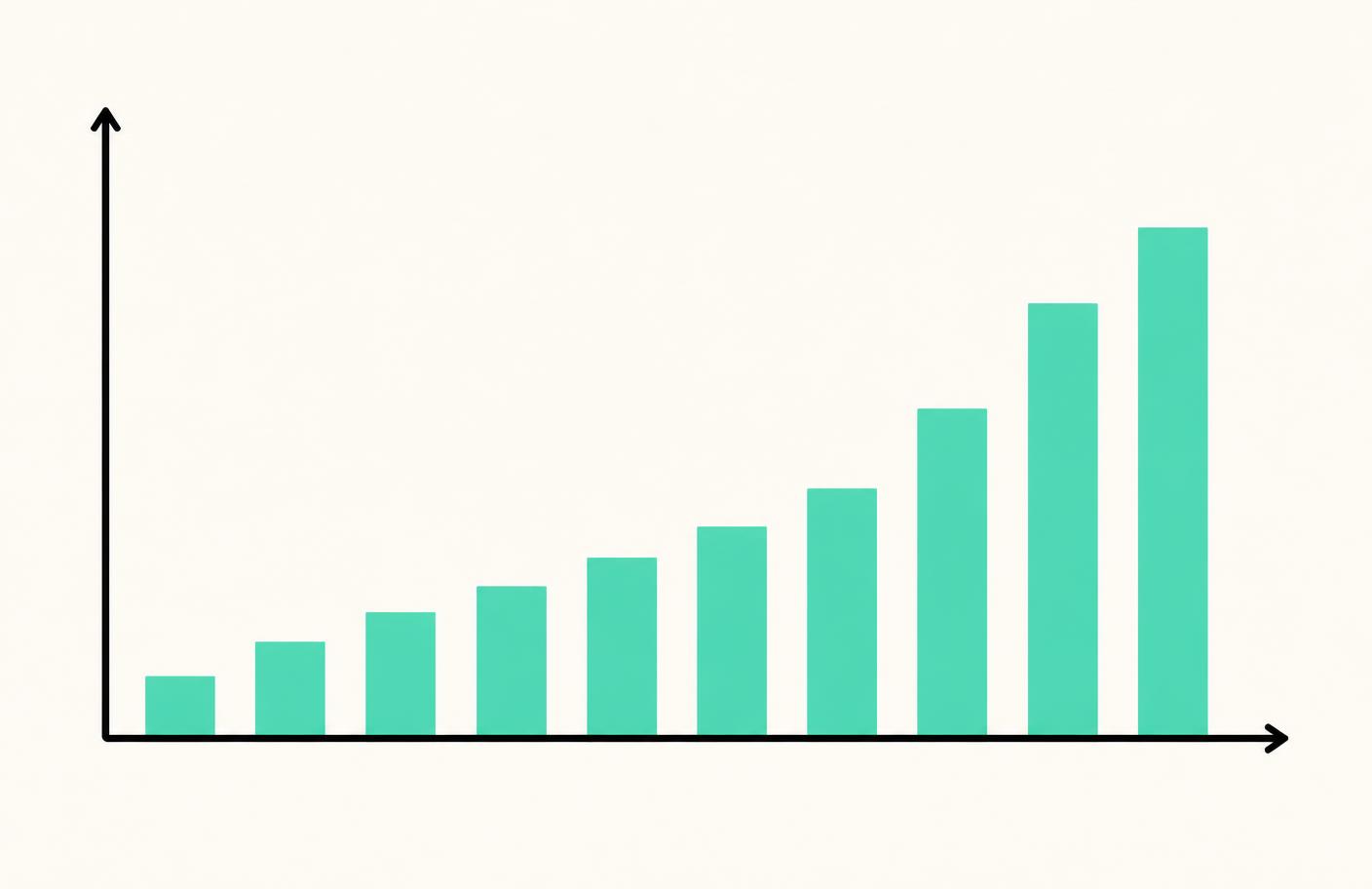
Recorded results lean toward the higher end of the scale.
How our test is different
Most sites hosting this checklist do the bare minimum: a wall of checkboxes, a submit button, and a number. Ours is built around a few practical differences.
Category breakdown, not just a total
Our result page splits your answers into categories so you can see which parts of the list drove your score. A 62 built mostly from social questions looks nothing like a 62 built from higher risk items, and the breakdown makes that visible.
Comparison against real recorded results
Your score is shown next to the distribution of scores recorded on this site, so the comparison uses actual data collected here rather than a figure copied between blogs.
Built for phones first
The test runs as a progressive checklist with a visible progress bar, large tap targets, and keyboard support. You can finish it on a phone without pinching to zoom on a hundred tiny checkboxes.
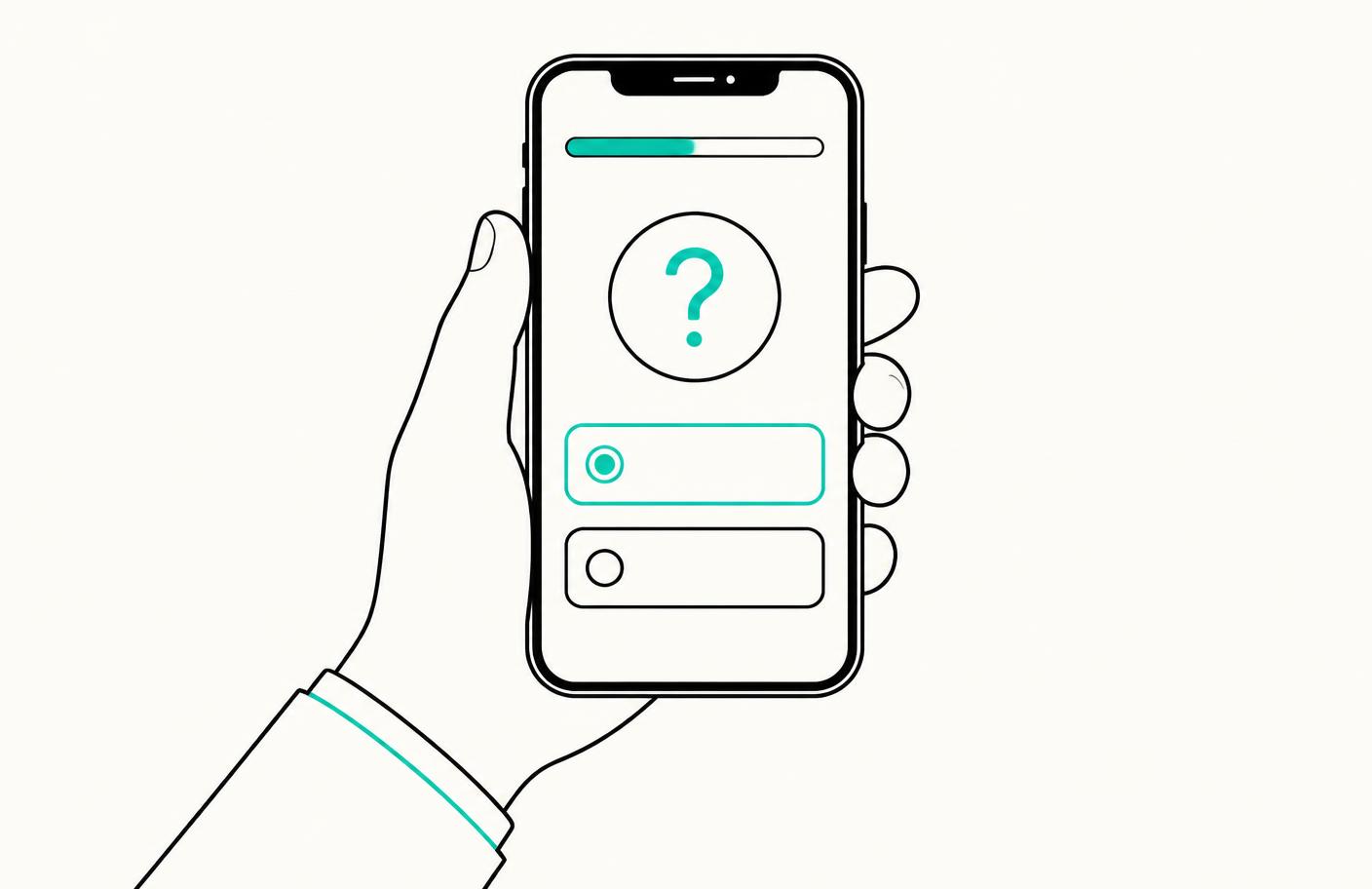
The test is designed for phone screens before desktop.
No account required and no identity stored
You can take the full test without signing up. Nothing on the site asks for your name, email, or phone number to see a result. Creating an account is optional and only exists if you want to keep a history of your own scores.
No advertising overlays mid test
The question flow is not interrupted by popups or forced redirects, so the score you get is the one you finish with.

Scores are recorded without personal identifiers.
Who takes it and why
Three groups make up most of the traffic to any version of this checklist. The first is students in their first weeks at university, where the test is still used as a dorm icebreaker much as it was on paper. The second is friend groups comparing scores in a group chat, usually for the reaction rather than the number. The third is people who saw the score mentioned in a short video or comment thread and wanted to know what the figure meant.
The reason the format survived for three decades is that it needs no setup. There is nothing to install, no account, no explanation required before you start, and the result is a single number that is easy to compare. That simplicity is also its limit: a number this blunt cannot capture context, timing, or intent behind any answer.
Getting a result that is worth comparing
Answer for things you have actually done rather than things you were present for, count an item once no matter how often it happened, and finish the list in one sitting. Stopping halfway and guessing the rest produces a score that is not comparable to anyone else's.
What the test is not
The test is not a measure of character, morality, or worth. It has no clinical validation, no standardised question set, and no scoring research behind it. It also cannot be failed. Treat it as a conversation starter with friends, and skip questions that touch on anything you would rather not revisit.
If a low score is being used to pressure or shame someone, that is a problem with the person doing it, not with the number.
Watch: the test in under a minute
Frequently asked questions
What is a good Rice Purity Test score?
There is no good or bad score. For context, results recorded on this site average 65.3 with a median of 71, so anything in the 60s or 70s is common.
Is the Rice Purity Test accurate?
It accurately reports what you checked. It is not a validated psychological instrument and makes no prediction about your personality or future behaviour.
How long does the test take?
Most people finish in four to seven minutes. There is no timer, so you can move at your own pace.
Do you store my answers?
Scores are recorded without personal identifiers so the site can show an honest distribution. Your name, email, and phone number are never requested to take the test.
Can I retake the test?
Yes, as many times as you like. Signing in is the only way to keep a saved history of your own results.
Why do question lists differ between sites?
The original list was copied and edited repeatedly after it moved online. Different hosts kept different edits, so scores are only comparable within the same version.
Take the test
If you want your own number plus a category breakdown and a comparison against recorded results, start here: Rice Purity Test.
Related reading
- How the rice purity score is calculated, with the formula and a worked example.
- The complete history of the Rice Purity Test.
- Take the 100 question test or read the FAQ and the about page.
Sources
- Rice University, the Houston campus the checklist is named after.
- The Rice Thresher, the student newspaper that has covered campus life since 1916.
- National Library of Medicine, for research on the limits of self report questionnaires.