Frequently Asked Questions About the Rice Purity Test
A question and answer guide covering scoring, privacy, accuracy, history, sharing and retaking the Rice Purity Test.
This Rice Purity Test FAQ collects the questions people ask most often about scoring, privacy, accuracy, history, sharing results, and retaking the checklist. Instead of a short list at the end, every question here gets its own answer so you can jump straight to the one you need. For the basics of the test itself, start with what is the Rice Purity Test.

Most questions about the test fall into a few consistent categories.
Scoring
How is my score calculated?
You start at 100 points. Each item you check off the 100 item checklist subtracts one point. Your final score is 100 minus the number of items checked. Every item carries equal weight. For a full explanation, see how the score is calculated.
What is a good score?
There is no official "good" score. It is a personal read of your own experiences. Based on the anonymous results recorded on this site, scores from 83 completed tests average 64.9, with a median of 70, so many people land in the 60 to 79 range. See what your score really means for band by band detail.
What does a perfect 100 mean?
A 100 means no items on the checklist applied to you at the time you took it.
What does a score around 70 mean?
A score near 70 sits close to the site's recorded median, meaning a moderate number of items applied.
Can my score go up after I take the test?
No. Once an experience happens, it stays checked in any future honest attempt. Scores can only move down or stay the same over time, never up.
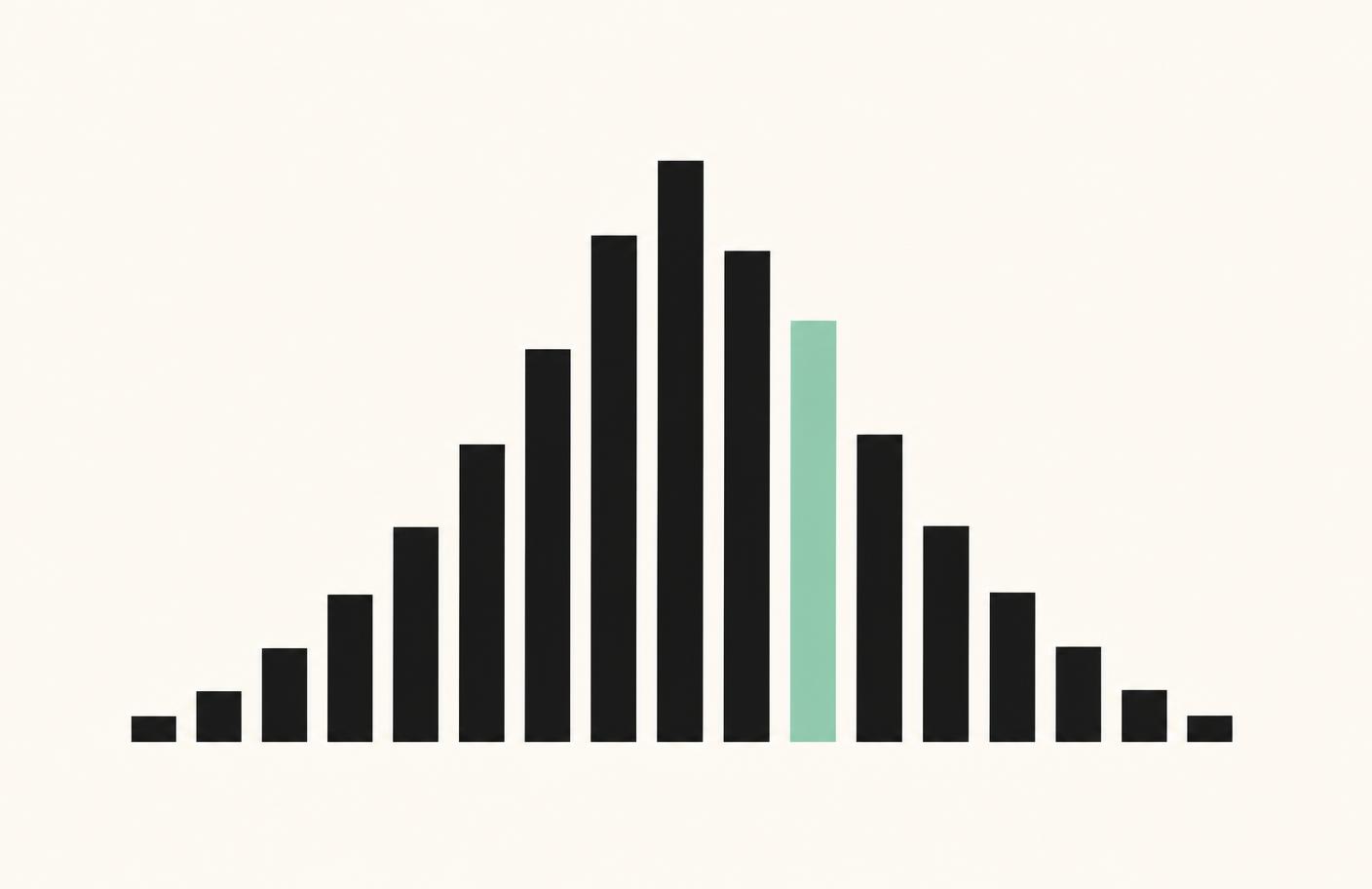
Recorded scores spread across every band from below 40 to a perfect 100.
Privacy
Is the Rice Purity Test anonymous?
Yes. Scoring happens in your browser, and nothing is tied to your name unless you create an account and choose to save your history.
Does the site store my individual answers?
Your checklist answers are processed to calculate the score in your browser. Unless you sign in to save your result to an account, there is no name or identity attached to that calculation.
Can someone else see which items I checked?
Not through this site. What you share, whether a screenshot or a spoken number, is entirely up to you.
Accuracy
Is the Rice Purity Test accurate?
It accurately counts checked items and produces a consistent score from that count. It does not verify honesty, and it is not a scientific or psychological instrument.
Can two people with the same score be very different?
Yes. The same score can be built from completely different checked items, so equal numbers do not mean equal experiences.
Does the test measure morality or worth?
No. It only counts items from a fixed checklist. It says nothing about character, intelligence, or value as a person.
History
Where did the Rice Purity Test come from?
It started as informal student culture at Rice University in Houston. Full background is covered in the history of the Rice Purity Test.
Is it still used the same way today?
The core 100 item checklist format has stayed consistent, and it has spread well beyond its original campus, now taken online by people with no connection to Rice University.

Score bands are a simple way to compare results without focusing on the exact number.
Sharing and retaking
Is it normal to share scores with friends?
Yes, it is commonly used as an icebreaker or casual group activity. Nobody is obligated to explain the specifics behind their number, only the score itself if they choose to share it.
Can I retake the test later?
Yes, you can take the Rice Purity Test as many times as you like. Just expect your score to trend downward over time rather than upward, since checked items accumulate.
Does the site save my history across visits?
Only if you create an account and choose to save results. Without an account, each attempt is a standalone, anonymous calculation in your browser.
Can I compare my score to the site's overall data?
Yes. See the most common rice purity score for the full band by band breakdown from the anonymous results recorded on this site.
Where do I go if my question is not answered here?
Check the general site FAQ, or visit the about page to learn more about how this site works.
Comparing scores with friends is one of the most common uses of the test.